


The Connoisseur’s Guide to Artisan Chocolate in Dubai: A 2026 Luxury Perspective
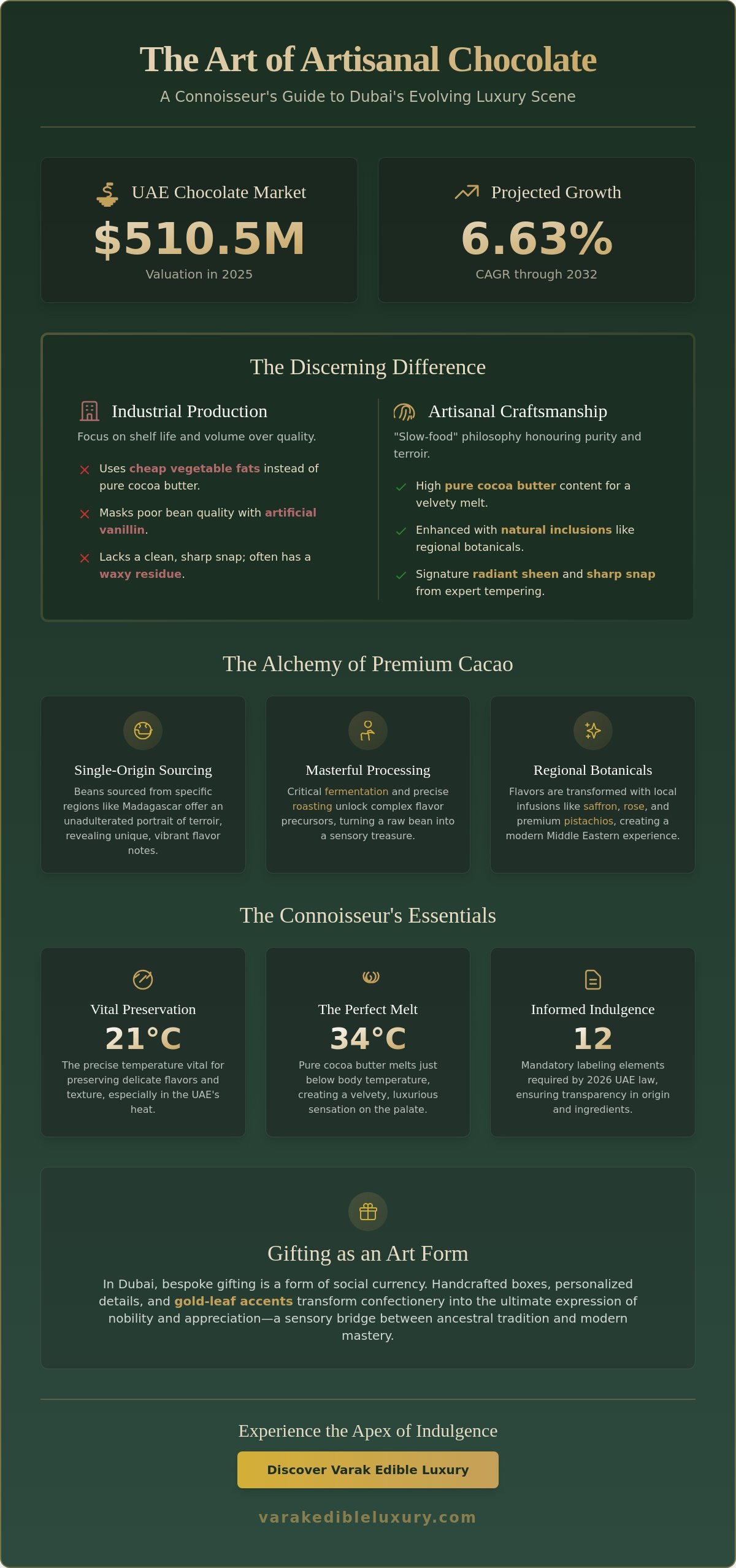
Did you know the UAE chocolate market reached a valuation of $510.5 million in 2025, yet true artisanal mastery remains a rare find? In a city where opulence is the standard, distinguishing between commercial luxury and genuine craftsmanship is a skill reserved for the discerning few. It's easy to feel overwhelmed by generic options that prioritize shelf life over the purity of provenance. Most connoisseurs find the distinction between mass-produced sweets and handcrafted art increasingly blurred by clever marketing.
We believe that every bite should be a sensory journey that honors the heritage of the cacao bean. This guide promises to elevate your expertise, offering a deep dive into the intricate flavor profiles and bespoke processes that define Dubai’s 2026 confectionery scene. You'll gain the confidence to identify superior ingredients, such as the premium pistachios that surged to $4.57 per pound in March 2026, and learn the essential techniques for storing these delicate creations in the intense heat. From decoding the 12 mandatory labeling elements required by UAE law to selecting the perfect bespoke gift, we invite you to explore the intersection of ancestral tradition and modern artisanal mastery.
Key Takeaways
- Distinguish between industrial mass-production and the "slow-food" movement of true artisanal craftsmanship rooted in purity and terroir.
- Discover how regional botanicals like saffron, rose, and pistachio transform traditional cacao into a modern Middle Eastern sensory experience.
- Master the professional five-step sensory ritual for tasting chocolate and understand why maintaining a precise 21°C environment is vital for flavor preservation in the UAE.
- Uncover the alchemy behind single-origin sourcing and the fermentation processes that define the soul of high-end confectionery.
- Learn why bespoke gifting has evolved into a form of social currency, where gold-leaf accents and handcrafted boxes represent the ultimate expression of nobility.
Beyond the Bar: Defining the Essence of Artisanal Chocolate in Dubai
In the heart of Dubai, luxury is a language spoken through precision and heritage. True artisanal chocolate represents a departure from the mundane, moving away from mass-produced uniformity toward a curated experience of terroir and craftsmanship. While industrial confectionery prioritizes shelf stability and high-volume output, the artisanal movement embraces a "slow-food" philosophy. It treats the cacao bean as a precious medium, much like a jeweler treats a raw gemstone. For the discerning Dubai clientele, this distinction is paramount. As the local market matures with a projected compound annual growth rate of 6.63% through 2032, the expectation for ingredient transparency has never been higher.
This evolution is supported by the 2026 UAE food labeling regulations, which now require 12 mandatory elements on every package. These details, including precise allergen declarations and country of origin, allow connoisseurs to trace the lineage of their indulgence. The rich history of chocolate teaches us that cacao was once a currency of nobility; today, in the boutiques of the Emirates, it has reclaimed that status as a form of edible art. It is no longer just a snack. It's a sensory bridge between ancestral heritage and modern mastery.
Industrial vs. Artisanal: The Discerning Difference
Mass-market bars often hide behind the label of "premium" while substituting expensive cocoa butter with cheap vegetable fats and masking poor bean quality with artificial vanillin. Artisanal creators reject these shortcuts. They focus on high cocoa butter content and natural inclusions that respect the palate. You can identify this quality through physical markers. A superior bar possesses a radiant sheen and a clean, sharp snap when broken. These are the signatures of expert tempering, a process that stabilizes the fat crystals to ensure a smooth, lingering finish rather than a waxy residue. In a city that celebrates the finest things in life, these technical details separate the ordinary from the extraordinary.
The Chemistry of Cacao and Sensory Pleasure
The allure of fine chocolate is rooted in science. It contains theobromine, a natural alkaloid that provides a gentle, sustained energy lift and contributes to the "feel-good" effect associated with high-quality cacao. The magic, however, lies in the melting point. Pure cocoa butter melts at approximately 34°C, which is just below human body temperature. This creates a physical sensation where the solid bar transforms into a velvet liquid the moment it touches the tongue. This transition is most exquisite when exploring the depths of a silky ganache, where the emulsion of cream and cacao reaches its most opulent, melting expression.
From Bean to Boutique: The Alchemy of Premium Cacao Processing
The creation of a masterpiece begins long before the first mold is poured. It starts in the soil of equatorial estates where the distinction between single-origin and blended cacao beans is first drawn. Single-origin beans offer an unadulterated portrait of a specific region, while blends are meticulously curated to achieve a signature, consistent profile. This journey is one of transformation. Fermentation serves as the soul of flavor development; it's a natural chemical process where heat and time unlock the precursors to the complex notes we eventually savor. Without this critical step, the bean remains bitter and one-dimensional.
Roasting follows as a delicate act of balance. The goal isn't just to cook the bean, but to preserve its unique floral or nutty characteristics. A master chocolatier monitors the temperature with the precision of a watchmaker. If the roast is too light, the chocolate feels raw; too dark, and the nuances of the terroir are lost to ash and smoke. This is where the true alchemy happens, turning a raw agricultural product into a sensory treasure that defines the peak of indulgence.
The Importance of Ethical and Sustainable Sourcing
Modern luxury demands integrity. The shift toward direct trade ensures that farmers receive a fair share of the value, which directly correlates to the quality of the harvest. Sourcing dictates the narrative of the final bar. Madagascar’s beans are celebrated for their vibrant, berry-like acidity, while Ecuador’s Arriba Nacional cacao is prized for its jasmine-scented floral notes. Even inclusions are subject to this scrutiny. With global pistachio prices reaching $4.57 per pound in March 2026, the cost of artisanal excellence reflects the rarity of its components. Varak remains committed to these exquisite origins, selecting only the finest beans for our dark chocolate selections to ensure every bite reflects a legacy of purity.
The Master Chocolatier’s Touch: Conching and Beyond
Conching is the secret to the velvet texture that defines high-end confectionery. During this hours-long process, the cocoa mass is continuously aerated and ground to remove unwanted volatile acidities. It's a purification of the palate. Tempering then acts as the thermal training of the cocoa butter crystals. Proper tempering ensures the bar has a mirror-like finish and a satisfying snap. These same principles of aeration and stability are perfected when crafting a world-class mousse, where texture becomes as important as taste. To experience these artisanal standards firsthand, you might explore our bespoke collections.
A Global Palette with a Local Soul: Exploring Regional Flavor Profiles
The landscape of indulgence in the UAE has shifted from a mere appreciation of European traditions to a sophisticated fusion that celebrates regional identity. While the foundations of the craft remain rooted in classic techniques, the flavor profiles of 2026 reflect a more adventurous, global palate. This evolution is driven by a desire for "clean snacking," where luxury is defined by organic ingredients and the inherent health benefits of high-percentage dark cacao. In Dubai, chocolate is no longer just a confection; it's a canvas for cultural storytelling. It bridges the gap between the historic spice routes and the modern, minimalist aesthetic of the city's most exclusive boutiques.
This year, we see a profound emphasis on texture as a primary driver of pleasure. Artisans are looking beyond simple fillings to incorporate elements like honey medovic and mawa, creating a multi-layered bite that resonates with local heritage. This shift aligns with the 12% annual growth the premium segment has enjoyed over the last three years. Consumers now seek out unique sensory experiences that mass-market brands simply cannot replicate. It's a movement that prioritizes the "slow-food" experience, where every ingredient is chosen for its ability to contribute to a larger narrative of taste.
Middle Eastern Infusions: Saffron, Rose, and Cardamom
The integration of regional botanicals is perhaps the most evocative trend in modern artisanal confectionery. Saffron, often called "red gold," lends a metallic sweetness and a regal golden hue to velvet ganaches. Pairing the delicate, floral notes of rose with the deep, earthy bitterness of 70% dark cacao requires a master’s restraint. Too much, and the floral notes overwhelm; too little, and the essence is lost. Cardamom adds a warming, resinous spice that echoes the tradition of Arabic coffee, grounding the sweetness in a familiar cultural context. These infusions don't just provide flavor. They evoke the very spirit of the Gulf, turning a simple sweet into a moment of reverence.
Modern Classics: Salted Caramel and Beyond
While traditional flavors remain, they're being reimagined through a local lens. Sea salt continues to be a staple, acting as a catalyst that unlocks the hidden complexities of the bean. However, the true modern classics in Dubai are those that incorporate the region's natural bounty. The integration of local dates and premium nuts creates a "flavor journey" within a single curated gift box. With global pistachio prices reaching $4.57 per pound in March 2026, the inclusion of this vibrant green nut has become a marker of true exclusivity. Whether it's a pistachio-filled bar with crispy knafeh or a date-centered truffle, these combinations offer a sophisticated balance of sweetness, salt, and crunch that defines the contemporary luxury standard.
The Connoisseur’s Ritual: Tasting and Preserving Chocolate in the UAE
Savoring a rare creation requires more than just an appetite; it demands presence. In the unique climate of the Emirates, where external heat can compromise the structural integrity of the finest chocolate, the ritual of tasting becomes an act of preservation in itself. To truly appreciate the labor of the artisan, you must respect the temperature. While many believe cold storage is the only solution for the desert, the optimal temperature for flavor release is exactly 21°C. At this threshold, the cocoa butter begins its elegant transition from solid to liquid, carrying complex volatiles to your olfactory receptors. If the bar is too cold, these notes remain locked away, leaving the experience muted and incomplete.
Mastering this ritual elevates the simple act of eating into a sensory performance. It is a deliberate, unhurried process that mirrors the time invested in the bean’s own journey. By following a structured approach, you don't just consume a sweet; you decode a story of origin, fermentation, and craft. This expertise allows you to distinguish between a commercial product and a bespoke masterpiece that deserves a place in your private collection.
The Five Steps to Professional Chocolate Tasting
Engaging with high-end confectionery involves all five senses. Start with Sight; a mirror-like gloss indicates that the tempering was executed with precision. Next is Sound. A sharp, clean snap when broken is the hallmark of stable fat crystals and high cocoa butter content. Inhale the bouquet by cupping the piece in your hand to gently warm it, releasing the aromatic notes of fruit, spice, or earth. Feel the melt on your palate by letting the piece rest on your tongue without chewing. Finally, identify the Finish. A world-class creation will leave a lingering resonance that evolves even after the piece has vanished, a testament to its artisanal purity.
Preservation in the Desert: Avoiding the 'Bloom'
Dubai's intense humidity and heat present a dual threat to your collection. You may occasionally notice a white, dusty coating on your bars. This is "bloom," and it's important to know it doesn't always mean the product is spoiled. Fat bloom occurs when heat causes cocoa butter to melt and re-settle on the surface, while sugar bloom is a gritty texture caused by humidity. Both are structural changes rather than signs of decay. To prevent this, your refrigerator is actually the enemy unless you use an airtight container; condensation will ruin the texture instantly. Instead, opt for a wine cooler or a climate-controlled pantry maintained between 15°C and 18°C. For those who value the longevity of their treasures, we recommend you explore our storage-optimized collections to ensure your gifts remain as pristine as the day they were crafted.
Varak’s Edible Luxury: Elevating Gifting into an Art Form
True luxury is a dialogue between the artisan and the connoisseur. In the high-stakes social landscape of Dubai, a gift is more than a gesture; it's a reflection of one’s own discernment and a tribute to the recipient's status. A curated selection of chocolate serves as the ultimate social currency, bridging the gap between traditional hospitality and modern prestige. At Varak, we believe that confectionery should be treated as nobility. It isn't merely food, but a form of edible art that commands respect and invites a moment of pure, unhurried celebration. Whether it's for a royal wedding or a high-level corporate gathering, the presence of handcrafted sweets signifies a commitment to the finer details of life.
The unboxing ritual is an intentional pause in a fast-paced world. It's a moment of quiet anticipation where the tactile quality of the packaging prepares the palate for the opulence within. We treat our boxes as vaults for treasures, ensuring that the visual aesthetic mirrors the artisanal integrity of the sweets themselves. For those who wish to leave a lasting legacy, our bespoke commissions offer a way to translate personal stories into flavor. We work closely with clients to create unique chocolate legacies for 2026, tailoring every ingredient and finish to reflect a specific vision or heritage. This level of customization ensures that no two experiences are ever quite the same.
The Symbolism of Varak: Gold Leaf and Nobility
The name Varak carries the weight of history and high-status hospitality. Historically, the application of fine silver or gold leaf was a mark of respect shown to the most honored guests across the East. We've elevated this tradition, using gold leaf to transform a simple truffle into a piece of edible jewelry. This aesthetic is a hallmark of our unique positioning, seamlessly blending the meticulous, minimalist detail of Russian heritage with the unapologetic opulence of Dubai. The gold doesn't just add a shimmering glow; it's a symbol of purity and a marker of artisanal mastery that elevates the entire sensory experience.
Curating the Perfect Luxury Gift Hamper
Creating a complete sensory gift requires a harmony of diverse elements. To achieve this, we pair our signature chocolates with artisanal cakes and fresh botanicals, creating a layered experience of texture, scent, and taste. This holistic approach has led to a significant rise in demand for luxury gift hampers within Dubai’s elite corporate and private sectors. Each hamper is a curated narrative, designed to evoke an emotional connection that lasts long after the final bite. We invite you to visit the Varak boutique for a personalized consultation, where we can help you craft a bespoke gift that transcends the ordinary and becomes a cherished memory.
Mastering the Art of Decadent Selection
The journey from a raw cacao bean to a bespoke treasure is a testament to the power of patience and precision. You now possess the expertise to distinguish true artisanal quality from industrial imitation by identifying the physical markers of superior tempering and the nuances of regional botanicals. By mastering the professional five-step tasting ritual and maintaining a climate-controlled environment of 21°C, you ensure that every bite remains a pristine sensory experience. In a city where luxury is the standard, choosing handcrafted chocolate is a statement of refined taste and a commitment to the "slow-food" movement.
Every creation at Varak is a celebration of this heritage, meticulously handcrafted in Dubai and adorned with premium 24k Gold Leaf finishes. Whether you're honoring a tradition or creating a new legacy, our collections offer a bridge between ancestral roots and modern opulence. With same-day delivery available across Dubai, Sharjah, and Abu Dhabi, the ultimate indulgence is always within reach. We invite you to step into a world where confectionery becomes art and every gift tells a story of nobility.
Experience the pinnacle of artisanal chocolate at Varak Edible Luxury
Frequently Asked Questions
What is the difference between artisanal and commercial chocolate?
Artisanal production focuses on small-batch craftsmanship, high cocoa butter content, and ethical sourcing of single-origin beans. In contrast, commercial varieties often substitute expensive cocoa butter with vegetable fats and use artificial vanillin to mask lower-quality cacao. True artisanal mastery prioritizes the unique terroir of the bean, ensuring a complex flavor profile that mass-market industrial processes cannot replicate.
How should I store luxury chocolates in the Dubai heat?
The ideal storage environment is a climate-controlled pantry or a dedicated wine cooler maintained between 15°C and 18°C. Avoid the standard household refrigerator whenever possible, as high humidity can lead to condensation and texture degradation. If you must use a fridge, ensure the chocolate is kept in an airtight container and allow it to reach the tasting temperature of 21°C before opening the seal.
Is dark chocolate healthier than milk chocolate?
Dark varieties containing at least 70% cacao are considered a superior choice for clean snacking due to higher concentrations of antioxidants and flavanols. These bars contain significantly less sugar and zero milk solids, which allows the natural, heart-healthy properties of the cacao bean to remain prominent. This focus on purity aligns with the 12% growth seen in the UAE's premium health-conscious segment over the last three years.
What does the percentage on a chocolate bar actually mean?
The percentage indicates the total weight of the bar that originates from the cacao bean, including both cocoa solids and cocoa butter. For example, a 70% bar contains 70% cacao-derived ingredients, while the remaining 30% usually consists of sugar, lecithin, and natural flavorings. Higher percentages offer a more intense, less sweet experience that highlights the bean's inherent floral or earthy notes.
Why does some chocolate have a white coating on it?
This white, dusty appearance is known as "bloom," and it occurs when temperature fluctuations cause fat or sugar to rise to the surface. Fat bloom happens when cocoa butter melts and re-solidifies, while sugar bloom is caused by humidity dissolving the sugar crystals. While the aesthetics and snap are affected, the product remains entirely safe to consume and can often be used for baking or melting.
Can I order bespoke chocolate boxes for a wedding in Abu Dhabi?
Varak specializes in bespoke commissions for grand celebrations, offering personalized consultations to create unique flavor legacies for your guests. We provide reliable, same-day delivery services across Abu Dhabi, Dubai, and Sharjah to ensure your treasures arrive in pristine condition. These handcrafted collections are designed to serve as the ultimate social currency for high-status weddings and corporate events.
What are the most popular chocolate flavors in the UAE for 2026?
Regional botanicals like saffron, rose, and cardamom are currently dominating the luxury market, reflecting a sophisticated fusion of global and local heritage. Multi-textured experiences are also highly sought after, particularly those incorporating premium pistachios, which reached a price peak of $4.57 per pound in March 2026. These complex profiles offer a sensory journey that celebrates the rich culinary traditions of the Gulf.
Does Varak offer vegan or clean snacking chocolate options?
Our collection includes a refined selection of high-percentage dark bars that naturally meet vegan and clean snacking standards. We prioritize purity and provenance, using organic ingredients and avoiding the artificial additives found in mass-market alternatives. Every piece is an invitation to indulge in a way that respects both your palate and your wellness goals without compromising on opulence.


